"The Other What" Podcast
Five59 Labs
2023-Present
Vertical
Geography
Media Type(s)
Tags
Credits
How it started
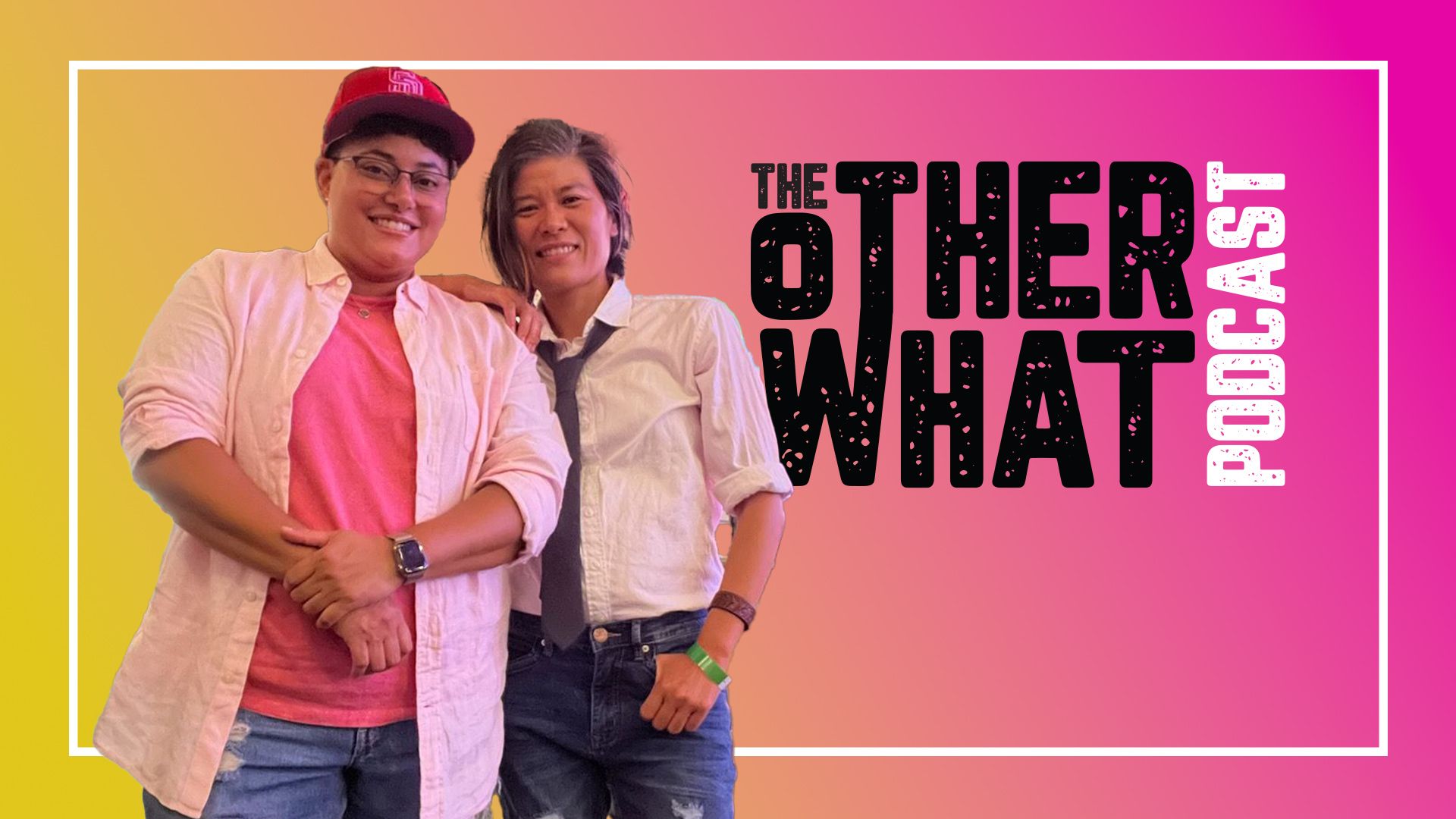
Sharon Goh and I have been friends for almost twenty years. When she moved back to Atlanta after a long chapter elsewhere, she met Désirée Jamerson, and the two of them started having the kind of long, layered conversations that friends keep telling you you should record. Eventually one of those friends said it out loud: you should do a podcast. Sharon messaged me asking how. The answer turned into an entire project.
I saw two things at once. One was a co-host pairing nobody was really making podcasts about. The other was a chance to do real media production for two voices that worked together and a perspective the medium wasn't serving.
The hosts
Sharon and Désirée come from different southern backgrounds, which is part of what makes the show work. Désirée brings gravitas. Sharon brings warmth. Together they create a common thread that holds episodes ranging across mid-life, divorce, identity, race, queerness, and what it means to live as multiple "others" in a world that pretends it has one default audience.
The format default in podcast culture skews white, urban, and northeastern. The Other What sits somewhere else: two queer women of color in Atlanta talking about a southern, mid-life, intersectional experience that gets very little oxygen in the medium.
What I do
All-in-one passion project. I run the production calendar, engineer the recording sessions, edit the episodes, and handle packaging and distribution. Working with the hosts, I help develop season concepts and arc; they handle their own guest relationships.
We started in audio and moved to video, which materially changed the room. Episodes run 45 to 60 minutes in two-host conversational format, with the camera adding the layer of presence that audio alone couldn't.
The custom site (Nuxt + Directus) gives the show a richer marketing platform than a default podcast-host page. It carries the episode archive, gathers community, and runs the merch that supports production.
What it did
The most useful piece of feedback we ever got was unintentional.
We were reviewing listener numbers when one of the hosts paused mid-scroll. "Here's something funny." A male coworker from her day job had started listening. Younger, straight, different background, outside the audience we'd designed for. On paper, he wasn't supposed to be there. But he had listened to an episode, something rooted in lived experience we hadn't polished over, and he came back. Then he came back again. When he finally told her, he explained why: he'd been curious about her life, started one episode, and got pulled in by stories from a perspective he had never encountered.
It wasn't trying to win him over. It was just real. He trusted it because he couldn't spot the performance.
That, more than the platform totals across Spotify, Apple Podcasts, YouTube, Pandora, Amazon Music, and Audible, is the proof I look at. Audiences underserved by the default podcast economy can hear the difference between something authentic and something manufactured. They sought it out. They stayed. The unexpected listeners came along anyway.